
Nuclear Fission · Reactor guide
Boiling Water Reactor
A light-water reactor that boils water directly in the core to produce steam for the turbine.
- Coolant
- Light water
- Moderator
- Light water
- Fuel
- Enriched uranium dioxide
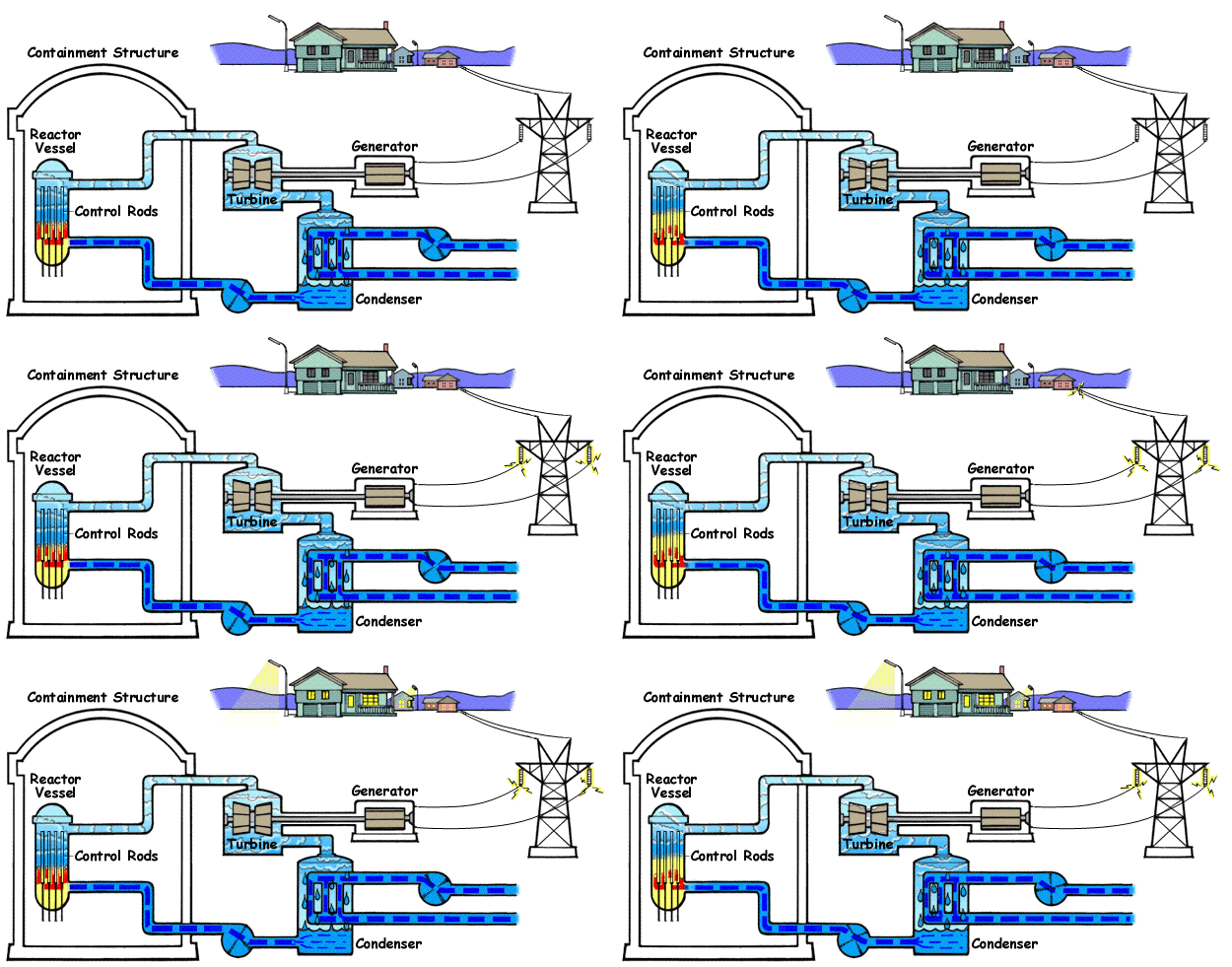
A boiling water reactor (BWR) allows water to boil inside the reactor vessel. The steam produced in the core flows through steam separators and dryers, then directly to the turbine, condenses, and returns as feedwater to the vessel.
BWRs are the second most common commercial light-water design. They trade a simpler heat path for equipment that must handle radioactive steam on the turbine side.
How It Works
- Water circulates through fuel assemblies; some boils in the upper core region.
- Steam separators and dryers inside the vessel remove water droplets from steam leaving the core.
- Steam drives the turbine-generator; the condenser returns water to the reactor via feedwater pumps.
- Jet pumps and recirculation loops adjust core flow and power without only moving control rods.
- Control rods enter from the bottom in many designs; reactivity also changes with void fraction (steam bubbles) in the core.
[Core: boil] → steam (in-vessel separation) → [Turbine] → [Condenser] → feedwater → [Core]
Because steam is generated in the vessel, the primary system and turbine building share radioactivity. Turbines, piping, and condensers may require radiation shielding and controlled maintenance.
Main Systems
| System | Role |
|---|---|
| Reactor vessel | Boiling, separation, and drying of steam |
| Recirculation loops | Change core flow rate to adjust power |
| Control rods | Shut down and regulate fission |
| Turbine / condenser | Direct steam cycle (radioactive on BWR side) |
| Containment | Suppresses pressure transients; holds radioactivity |
| Standby liquid control | Boron injection for emergency shutdown |
Fuel is enriched UO₂ in zirconium cladding, similar to PWRs. Refueling outages occur on multi-year cycles.
Safety Features
- Void coefficient: More steam in the core can change reactivity; modern BWRs are designed so net feedback remains acceptable under licensed conditions.
- Pressure suppression containment: Often a wetwell (torus) condenses steam during relief to limit pressure spikes.
- Emergency systems: Alternate injection, containment venting with filtration (post-Fukushima upgrades in many countries), and hardened vents where applicable.
The 2011 Fukushima Daiichi accident involved BWR units without power for cooling after a tsunami. It reinforced requirements for backup power, hydrogen management, and severe accident mitigation worldwide.
Where It Is Used
- United States: General Electric / Hitachi BWR fleets.
- Japan: Fukushima Daiichi and Kashiwazaki-Kariwa among others.
- Europe: Finland (Olkiluoto), Sweden, Switzerland historically.
Advanced BWR (ABWR) and Economic Simplified BWR (ESBWR) designs add passive safety and simplified systems for newer builds.
Tradeoffs
| Advantages | Disadvantages |
|---|---|
| No steam generators; fewer large components | Radioactive steam in turbine building |
| Can adjust power with recirculation flow | Void feedback requires careful stability analysis |
| Operating experience across decades | Containment and turbine maintenance under radiation |
Versus PWR: simpler steam path, but more widespread contamination of secondary-side equipment. Versus gas-cooled or fast reactors: BWRs are mature light-water thermal designs with the largest operating databases alongside PWRs.
Key Takeaways
- BWRs boil water in the vessel and send steam directly to the turbine.
- Recirculation and control rods manage power; void fraction matters for stability.
- Containment and emergency injection protect against loss-of-coolant events.
- Fukushima highlighted the need for indefinite cooling capability after beyond-design external events.