
Nuclear Fission · Reactor guide
Molten Salt Reactor
An advanced reactor concept that uses hot liquid salt as coolant, and sometimes as the fuel carrier.
- Coolant
- Molten salt
- Moderator
- Varies by design
- Fuel
- Solid fuel or fuel dissolved in salt
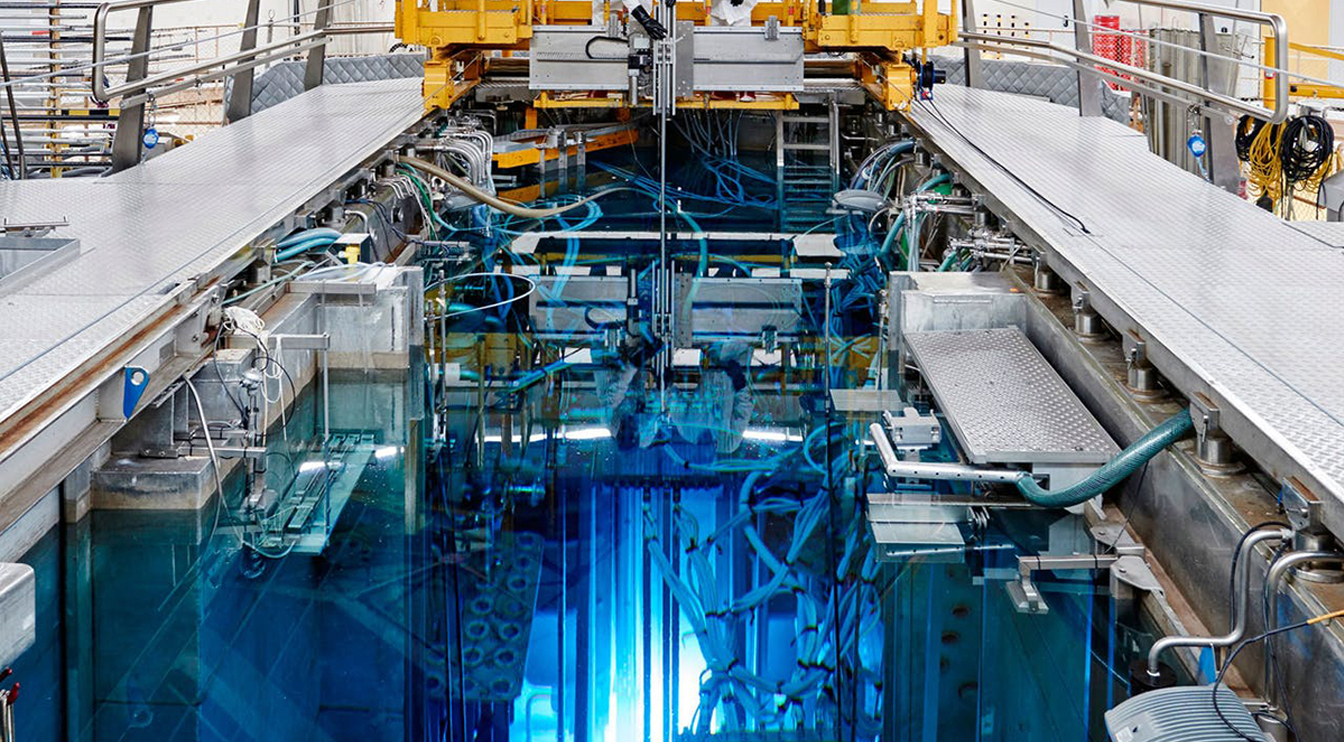
Image from ExtremeTech
A molten salt reactor (MSR) uses fluoride or chloride salts, melted at high temperature, as the coolant. In liquid-fuel designs, the fuel itself is dissolved in the salt (e.g., uranium fluoride). In solid-fuel designs, salt flows over fuel elements (graphite channels or plates) similar to a high-temperature thermal reactor.
MSRs were demonstrated at Oak Ridge National Laboratory in the 1960s (MSRE). Modern interest focuses on high-temperature output, low pressure operation, and passive safety features—plus thorium fuel cycles in some marketing narratives.
How It Works
Liquid-fuel MSR (classic concept):
- Salt containing dissolved UF₄ (or similar) circulates through the core where fission occurs in the liquid.
- Salt flows to a heat exchanger (secondary salt or gas) to generate power or process heat.
- Gas bubbling or freeze plugs (frozen salt drain plugs that melt on overheating) can drain the core to passive dump tanks for shutdown.
Solid-fuel MSR:
- Fuel stays in graphite or metal matrix; salt coolant removes heat only.
- Closer to HTGR safety logic with fluid fuel handling avoided.
  [Core salt] → primary loop → [Heat exchanger] → power cycle / process heat
       ↓ (passive drain tank on MSRE-style designs)
Main Systems
| System | Role |
|---|---|
| Primary salt loop | Coolant and possibly fuel carrier |
| Chemical processing plant (liquid-fuel) | Remove fission products online; add fertile material |
| Heat exchangers | Isolate radioactive primary salt from turbine fluid |
| Materials | Nickel alloys, graphite, and coatings resist hot corrosive salt |
| Off-gas system | Capture xenon and other volatiles from liquid fuel |
Safety Features
- Low pressure: Salt runs near atmospheric pressure in many designs—no massive high-pressure steam explosion energy in the primary loop.
- High boiling point: Salt remains liquid at high temperature; meltdown of fuel salt is not the same failure mode as solid fuel melting (though draining and freezing behavior must be managed).
- Negative temperature feedback possible in properly designed liquid-fuel cores.
- Freeze plug drain: Passive relocation of fuel salt to subcritical geometry if power is lost.
- Challenges: Corrosion, tritium production in lithium-bearing salts, and proliferation concerns if continuous chemical processing is used.
Where It Is Used
- Historical: MSRE (1965–1969) at ORNL proved fluoride salt circulation and operation.
- Today: No commercial MSR grid power; many startups (Kairos, Terrestrial Energy, ThorCon, etc.) and national labs pursuing licensing demonstrations.
- Related: Molten salt storage for solar thermal plants is a different technology—do not confuse with nuclear MSR.
Tradeoffs
| Advantages | Disadvantages |
|---|---|
| High temperature, low pressure | Corrosive salts attack materials |
| Passive drain tanks (some designs) | Liquid-fuel chemistry plant is complex |
| Flexible fuel cycle (U, Th, Pu) in theory | Limited modern operating experience |
| Potential for load-following | Regulatory and materials qualification still immature |
Versus LWR: MSRs run hotter and at lower pressure but lack decades of fleet data. Versus fast sodium reactors: both allow advanced fuel cycles; MSRs use liquid fuel handling instead of solid fuel + sodium.
Key Takeaways
- MSRs use molten salt as coolant; some designs dissolve fuel in the salt.
- MSRE demonstrated the concept; commercial deployment is still future / demo stage.
- Safety pitches emphasize low pressure and passive drain; engineering focuses on corrosion and chemistry.
- Separate liquid-fuel and solid-fuel MSR paths when comparing designs.