
Nuclear Fission · Reactor guide
Fast Neutron Reactor
A reactor designed to sustain fission with fast neutrons rather than slowing them down with a moderator.
- Coolant
- Sodium, lead, gas, or other coolants
- Moderator
- None
- Fuel
- Uranium, plutonium, or mixed fuels
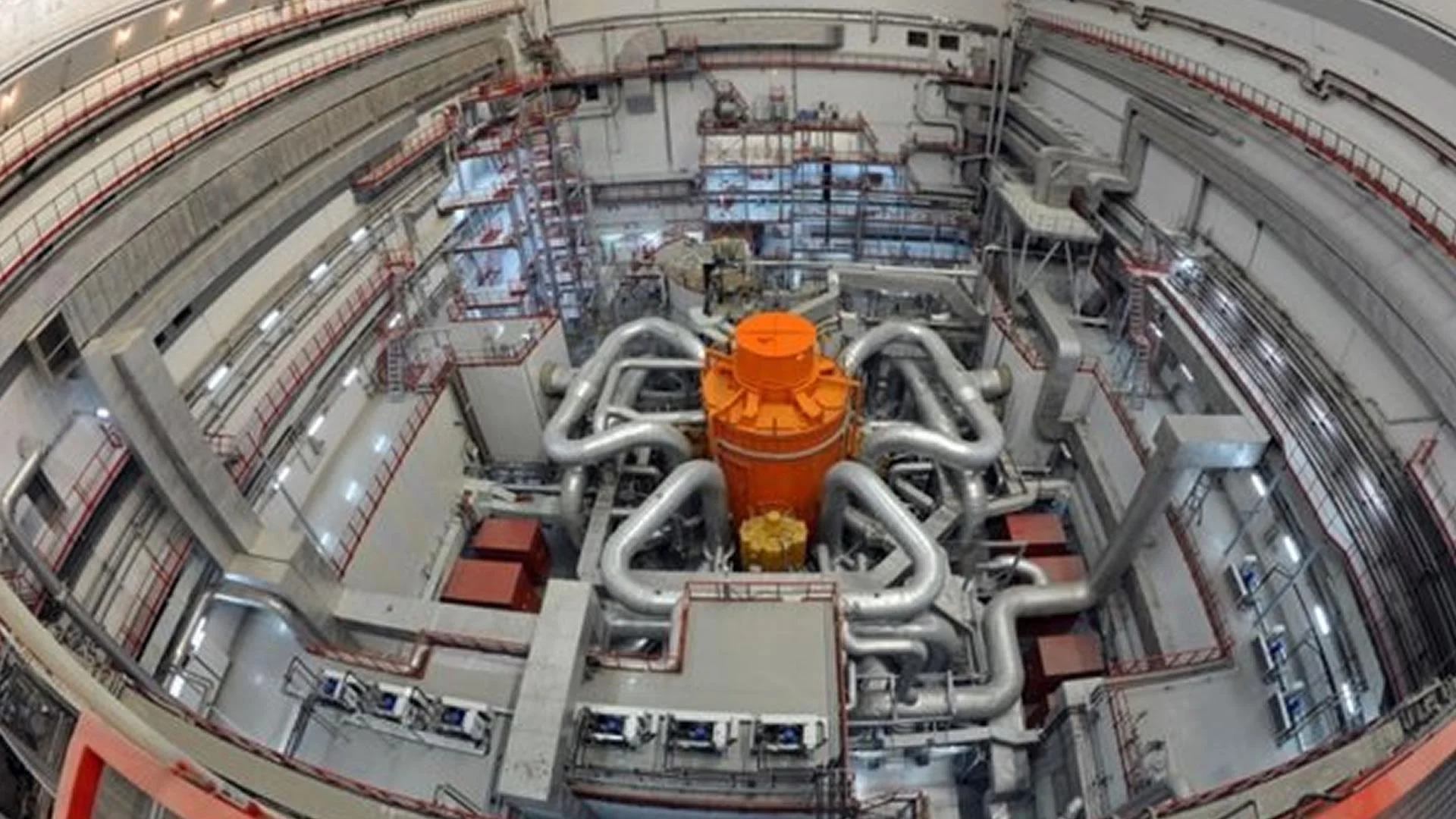
A fast neutron reactor (FNR)—or fast reactor—operates without a moderator, so neutrons remain at high energy. That changes which isotopes fission and enables breeding: converting fertile U-238 into fissile plutonium-239 (or thorium into U-233 in related cycles) faster than the reactor consumes fuel.
Fast reactors are often proposed for closing the fuel cycle, reducing long-lived waste, and using uranium more completely. Engineering challenges include coolant choice, materials, and sodium fire prevention.
How It Works
- Fissile fuel (Pu-239, U-235, or mixed oxide MOX) starts the chain reaction with fast neutrons.
- Surrounding blanket of fertile material (U-238 or thorium) captures neutrons and breeds new fissile material.
- Coolant removes heat—commonly liquid sodium (good heat transfer, no moderator), also lead/lead-bismuth, helium, or molten salts in other concepts.
- Control rods and neutron absorbers shut down the reactor; decay heat still requires removal.
  [Fast core] + [Blanket] → coolant → [Steam generator or direct cycle] → electricity
         ↑ fast neutrons breed Pu in blanket
Main Systems
| System | Role |
|---|---|
| Reactor core | Fissile + fertile fuel assemblies |
| Sodium circuits (typical) | Primary and intermediate loops isolate radioactive sodium from steam |
| Steam generators | Transfer heat to turbine water (secondary sodium loop common) |
| Fuel fabrication / reprocessing | Recycle plutonium and minor actinides (policy-dependent) |
| Containment | Address sodium-water reaction if steam generators leak |
Breeding and Fuel Cycle
| Concept | Meaning |
|---|---|
| Breeding ratio | Fissile atoms produced ÷ fissile atoms consumed |
| Breeder reactor | Ratio > 1 over time—makes more fuel than it burns |
| Burner reactor | Consumes plutonium/minor actinides from LWR waste |
Fast spectrum fission of transuranic elements is a strategy to reduce long-term waste toxicity, paired with reprocessing—controversial in some countries due to proliferation concerns and cost.
Safety Features
- Liquid sodium burns on contact with air/water—designs use secondary loops, inert atmospheres, and leak detection.
- Positive void effects differ from LWRs; core design must ensure shutdownability.
- Decay heat removal: passive sodium natural circulation featured in designs like PRISM and BN-800 lessons learned.
- Containment and fire suppression are central to licensing.
Where It Is Used
- Russia: BN-600, BN-800 at Beloyarsk—operating sodium-cooled fast reactors.
- France: Superphénix (shut down) provided experience; ASTRID was planned then paused.
- Japan: Monju (prototype, troubled history).
- India: FBTR, PFBR under construction—metal fuel, sodium cooled.
- China: CFR-600 program; U.S.: TerraPower Natrium, Oklo, others in development.
No fast reactor fleet matches LWR scale today; most projects are demonstration or export strategic programs.
Tradeoffs
| Advantages | Disadvantages |
|---|---|
| Better uranium resource utilization | Sodium leaks and fires require rigorous design |
| Can burn plutonium and actinides | Reprocessing infrastructure is expensive and politically sensitive |
| High power density core possible | Less commercial operating hours than LWR globally |
| Potential waste reduction | Proliferation safeguards on Pu handling |
Versus thermal LWR: fast reactors need fissile startup load but can breed in blanket. Versus fusion: both are "advanced" but fission fast reactors use proven chain-reaction physics with engineering hurdles mainly in materials and coolant.
Key Takeaways
- Fast reactors use no moderator; neutrons stay high energy.
- They enable breeding Pu-239 from U-238 and advanced fuel cycles.
- Sodium cooling is common; safety focuses on coolant fires and decay heat.
- Deployed examples exist, but the technology is not yet mainstream for commercial power.