
Chernobyl at 40: Wildlife and Science in the Exclusion Zone
Forty years after the 1986 accident at Chernobyl, the exclusion zone around the plant has become something few predicted: a vast, largely human-free landscape where wildlife thrives and scientists study radiation's long-term effects on ecosystems.
In an article for World Nuclear News, Claire Maden, Warwick Pipe, and Alex Hunt describe how roughly 135,000 people were evacuated from a 30-kilometre zone that later expanded across parts of Ukraine and Belarus. While some areas remain highly contaminated—with radionuclides such as caesium-137 and strontium-90 still present—much of the released radioactivity decayed quickly. The United Nations Development Programme has called the zone Europe's biggest rewilding experiment.
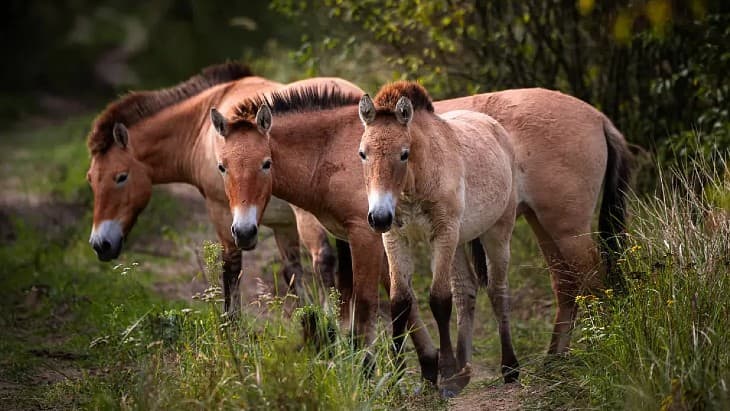
Protected reserves on both sides of the border now form one of mainland Europe's largest nature areas. Lynx, brown bears, wolves, bison, and more than 120 reintroduced Przewalski's horses live there. Research cited in the article suggests mammal populations often match or exceed those in nearby uncontaminated reserves; wolf densities in the zone may be seven times higher than in comparable wildlife areas, with scientists debating whether reduced human pressure, ecological adaptation, or both explain the pattern.
The zone is also a living laboratory. Studies have tracked melanistic tree frogs, fungi that may use melanin to capture radiation energy, and ongoing recovery of the infamous Red Forest. Some research has documented radiation-linked effects in birds, voles, and amphibians, while other work finds little correlation between contamination levels and mammal abundance. Separate studies have found that careful farming may be viable in less contaminated areas, supporting food security and rural renewal.
Tourism, resettlement, and forestry continue in limited form, though Russia's 2022 occupation disrupted access and science. Chernobyl's place in books, film, and games keeps public attention fixed on 1986—but the exclusion zone itself keeps teaching new lessons about radiation, resilience, and what happens when humans step back.
Read the full article: Chernobyl at 40: The unintended benefits for wildlife and science in the exclusion zone by Claire Maden, Warwick Pipe, and Alex Hunt, World Nuclear News.
Cover image: Przewalski's horses in the exclusion zone (State Agency of Ukraine for Exclusion Zone Management), via World Nuclear News.