
Aalo Atomics Pushes Toward a 2026 Reactor Milestone
Aalo Atomics is trying to move quickly from advanced reactor concept to real hardware. According to a March 2026 report from ANS Nuclear Newswire, the company has been lining up fuel fabrication, turbine equipment, Department of Energy approvals, and a path toward commercial licensing.
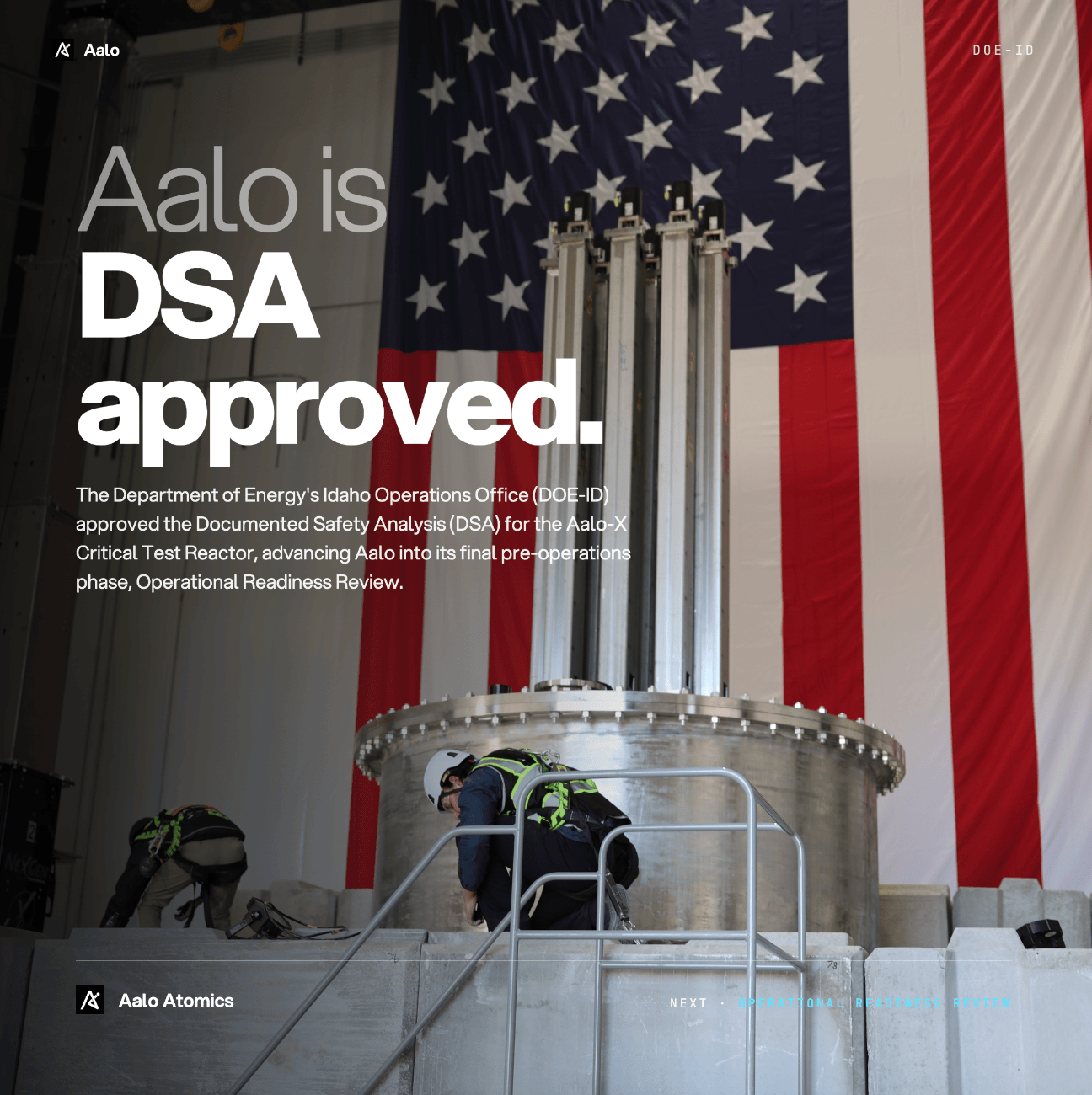
At the center of the plan is Aalo-X, a 10-MWe sodium-cooled reactor demonstration. The company has said it is aiming for a July 4, 2026, criticality target under the DOE Reactor Pilot Program, though the ANS report notes that full completion of Aalo-X is expected later in 2026. Aalo may reach zero-power criticality first through a separate critical assembly.
Why This Is Interesting
Aalo's design is small compared with traditional nuclear power plants. A 10-MWe reactor is closer to a modular product than a one-off megaproject. That makes the company's manufacturing plan especially important: Aalo has described a future "GigaWatt Factory" that could eventually produce large numbers of reactors each year.
That is an ambitious model for nuclear energy. Instead of building a few very large plants, the idea is to manufacture many smaller units with repeatable designs, tighter supply chains, and faster deployment.
Recent Milestones
The ANS article highlighted several pieces of Aalo's near-term roadmap:
- Fuel enrichment by Urenco USA has been completed and sent on for fuel fabrication.
- Global Nuclear Fuel is expected to fabricate fuel rods for the project.
- Baker Hughes has been selected to supply a 10-MWe steam turbine generator set.
- The DOE approved Aalo's Preliminary Documented Safety Analysis.
- Aalo is working toward final safety documentation and readiness review.
- The company expects to submit its first commercial license application to the NRC.
What To Watch
The next major question is whether Aalo can hit its criticality target and then keep momentum through demonstration, licensing, and manufacturing scale-up. The technical challenge is only part of the story. The company also has to prove that its factory-style approach can work inside the nuclear regulatory and quality-assurance environment.
If Aalo succeeds, it could become an important test case for small advanced reactors: not just whether the physics works, but whether nuclear projects can be built more like repeatable products.